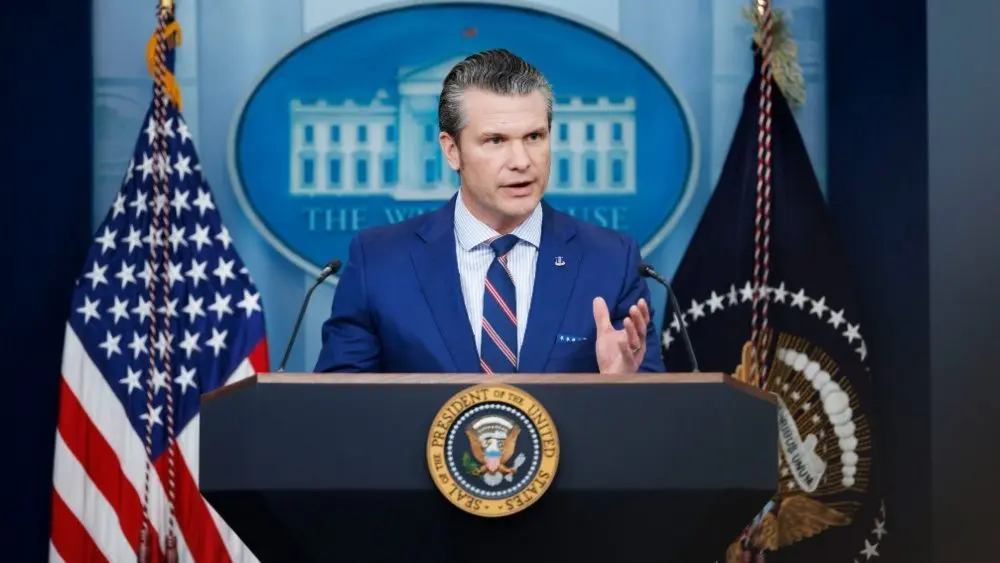


President Donald Trump on Monday introduced a $12 billion federal assistance package aimed at helping American farmers absorb the financial blow of the prolonged trade conflict with China. Trump announced the initiative during a White House event joined by Treasury Secretary Scott Bessent, Agriculture Secretary Brooke Rollins, lawmakers, and farmers from across the country.
Trump said the program will be funded through tariff revenue, arguing that “This money would not be possible without tariffs.” He added that “This relief will provide much-needed certainty to farmers as they get this year’s harvest to market and look ahead to next year’s crops,” noting that the support is also intended to ease food costs for consumers.
During Monday’s event, Rollins and Bessent emphasized the administration’s promise to strengthen the agricultural sector. Rollins said $1 billion would be held back to ensure assistance reaches specialty crop producers as well. She argued that farmers are still recovering from the “Biden years,” claiming Trump’s trade approach is creating new market opportunities despite the turbulence caused by tariffs.
According to administration officials, roughly $11 billion will be directed to crop producers through one-time payments under the Department of Agriculture’s Farmer Bridge Assistance program. The remaining funds will support farmers not covered under the main program. Rollins said payments will begin rolling out in the coming weeks and must be distributed by Feb. 28, 2026.
The announcement follows steep losses in U.S. soybean sales after China halted purchases in retaliation for U.S. tariffs. China—historically the largest buyer of American soybeans—had resumed limited purchases under a preliminary trade understanding reached in October. The White House previously said the agreement would lead to at least 12 million metric tons of U.S. soybean purchases in the last two months of 2025, but analysts have warned that imports may fall short of normal levels.
Farmers nationwide have reported tightening margins as they contend with low crop prices, high input costs, and the ongoing fallout from the trade war. Prices for corn, soybeans, and cotton have fallen over the past two years, while some growers say they continue to face significant financial strain. Bessent said U.S. soybean prices have risen as much as 15% since the October agreement, adding that China is buying in a “perfect cadence.”
The administration began exploring farm relief as early as October, with initial estimates suggesting more than $10 billion in potential support. Those discussions were stalled by a 43-day government shutdown.
Alongside the aid announcement, Trump pledged to ease environmental rules for agricultural machinery manufacturers, saying federal regulations “don’t do a damn thing except make it complicated,” and warned companies to lower equipment prices once those restrictions are lifted. Trump said Monday that he expects China to buy “even more than he promised to do,” while administration officials insisted Beijing remains on track to meet its commitments. The White House says the new aid program is designed to stabilize farmers until markets more fully recover.
China’s reengagement with U.S. agriculture follows a period in which Beijing looked to suppliers in Argentina and Brazil. In October, the Treasury Department announced a $20 billion currency swap agreement with Argentina, a move some U.S. farmers criticized as giving an advantage to foreign competitors. Bessent later said Treasury made a profit on the swaps, though that provided little reassurance to growers awaiting long-promised federal support.
Editorial credit: Jon Bilous / Shutterstock.com