


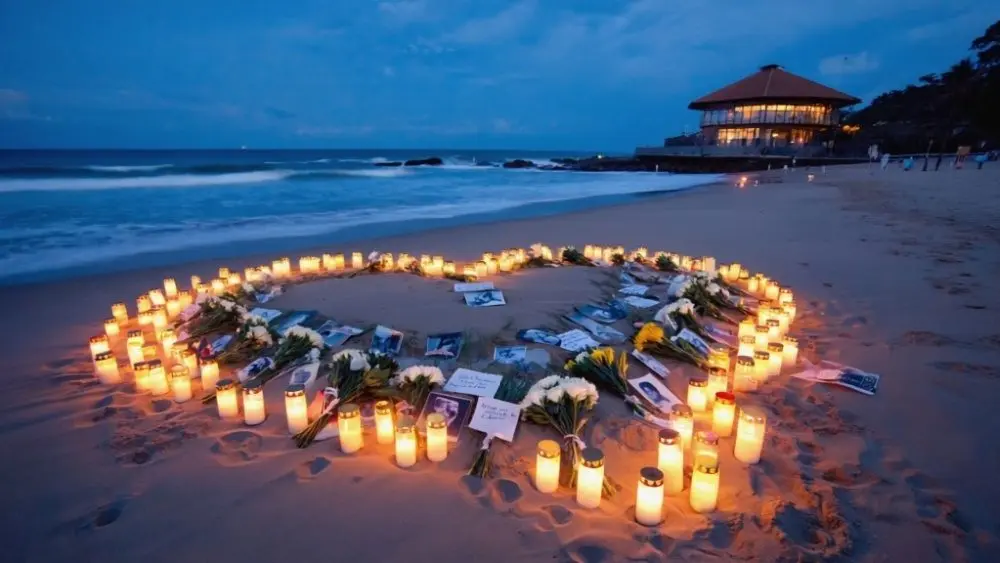
Australian authorities say the father and son accused of carrying out a deadly antisemitic attack during a Hanukkah gathering at Sydney’s Bondi Beach were motivated by Islamic State ideology and had recently traveled to the Philippines, a region known for past extremist activity.
Officials described the assault as a terrorist attack aimed at maximizing casualties among civilians. Fifteen people were killed and more than 40 wounded in Sunday’s shooting, including a 10-year-old girl and an 87-year-old Holocaust survivor. The attackers were identified as a 50-year-old father, Sajid Akram, who was fatally shot by police at the scene, and his 24-year-old son, Naveed Akram, who remains hospitalized after being wounded during the confrontation. Police said the firearms used were legally owned by the elder Akram.
Prime Minister Anthony Albanese said Tuesday investigators have found clear indicators of extremist influence. “It would appear that there is evidence that this was inspired by a terrorist organization, by ISIS” Albanese told reporters. Australia’s federal police commissioner, Krissy Barrett, echoed that assessment, calling the incident “a terrorist attack inspired by Islamic State.” Authorities said homemade ISIS flags and improvised explosive devices were discovered inside a vehicle linked to the suspects.
Investigators confirmed the two men traveled to the Philippines from Nov. 1 to Nov. 28, with immigration records listing Davao as their final destination. New South Wales Police Commissioner Mal Lanyon said authorities are examining where the men went and what they did during the trip. Australian media, citing security sources, reported the suspects may have received “military-style training,” though Philippine officials said there is no current evidence of foreign militants operating in the country’s south.
Indian police confirmed Sajid Akram was originally from Hyderabad, where he earned a degree before migrating to Australia in 1998. He held an Indian passport, while his children were born in Australia and are citizens. Indian authorities said Akram had limited contact with relatives in India and that family members “expressed no knowledge of his radical mindset or activities, nor of the circumstances that led to his radicalization.” Police added his son’s radicalization appeared to have no connection to India.
Australian officials acknowledged that Naveed Akram had been investigated in 2019 for possible links to a Sydney-based extremist network, but intelligence agencies later determined he posed no threat at the time. ABC News reported he had associations with individuals tied to pro-ISIS activity, though lawyers for one of those figures denied any involvement in the Bondi Beach attack.
Albanese and state leaders pledged to further tighten Australia’s already strict gun laws, noting that the elder suspect legally possessed multiple firearms. “The suspected murderers, callous in how they allegedly coordinated their attack, appeared to have no regard for the age or ableness of their victims.”
Israeli officials sharply criticized Australia’s government, pointing to a rise in antisemitic incidents. Israeli Ambassador Amir Maimon warned that Jewish Australians no longer feel safe and urged stronger action, saying, “We are now facing here a surge of antisemitism, and Australians of Jewish faith are not feeling secure in their own country, and this is insane.”
Editorial credit: Shutterstock AI Asset Gen